Vemira
7 ting du ikke visste om D-dagen
D-dagen den 6. juni 1944 markerte begynnelsen på slutten for Nazi-Tysklands herredømme i Europa. Operasjon Overlord, som den også ble kalt, var den største amfibiske invasjonen i historien og involverte hundretusener av allierte soldater. Men selv om D-dagen er godt kjent, skjuler den flere overraskelser og ukjente detaljer. Her får du sju ting du (kanskje) ikke visste om den historiske dagen.
 Royal Navy official photographer, Public domain, via Wikimedia Commons
D-Day on June 6, 1944, marked the beginning of the end of Nazi Germany’s dominance in Europe. Operation Overlord, as it was also called, was the largest amphibious invasion in history and involved hundreds of thousands of Allied soldiers. But although D-Day is widely known, it hides many surprises and lesser-known details. Here are seven things you (maybe) didn’t know about that historic day.
#1: The Invasion Was Originally Planned for June 5
 Mapham J (Sgt), No 5 Army Film & Photographic Unit, Public domain, via Wikimedia Commons
The invasion was initially scheduled for June 5, 1944, but poor weather over the English Channel forced General Dwight D. Eisenhower to postpone the operation by 24 hours. It was a risky decision, but meteorologists predicted a brief break in the weather that made it possible to proceed the following day.
![]()
Les også:
#2: The Germans Were Fooled by Fake Armies
 Supreme Allied Command, Public domain, via Wikimedia Commons
The Allies launched a massive deception campaign known as Operation Fortitude. They built fake camps, used inflatable tanks, and broadcasted false radio signals to make the Germans believe the invasion would take place at Pas de Calais – not Normandy. As a result, the German high command was caught off guard when the Allies landed much further west.
#3: Churchill Considered Having Himself Arrested
 Laing A (Sgt), No 5 Army Film & Photographic Unit, Public domain, via Wikimedia Commons
Winston Churchill was so concerned about the invasion’s outcome that he wanted to be present with the Navy on D-Day. His colleagues, including King George VI, strongly advised against it – and at one point they even considered having him arrested to prevent his participation. Churchill reluctantly backed down.
#4: The First Allied Casualties Fell Before the Landings
![SHAEF [Supreme Headquarters Allied Expeditionary Forces] Public Relations Division., Public domain, via Wikimedia Commons](https://no.motorsektionen.dk/wp-content/uploads/sites/19/2025/05/512px-thumbnail.png) SHAEF [Supreme Headquarters Allied Expeditionary Forces] Public Relations Division., Public domain, via Wikimedia Commons
SHAEF [Supreme Headquarters Allied Expeditionary Forces] Public Relations Division., Public domain, via Wikimedia Commons
Although the landings began early on the morning of June 6, the first Allied soldiers fell around midnight. These were paratroopers from units like the 101st and 82nd Airborne, who were dropped behind enemy lines to secure key bridges and roads. Many were scattered across wide areas and had to fight their way forward on their own.
#5: French Troops Also Took Part
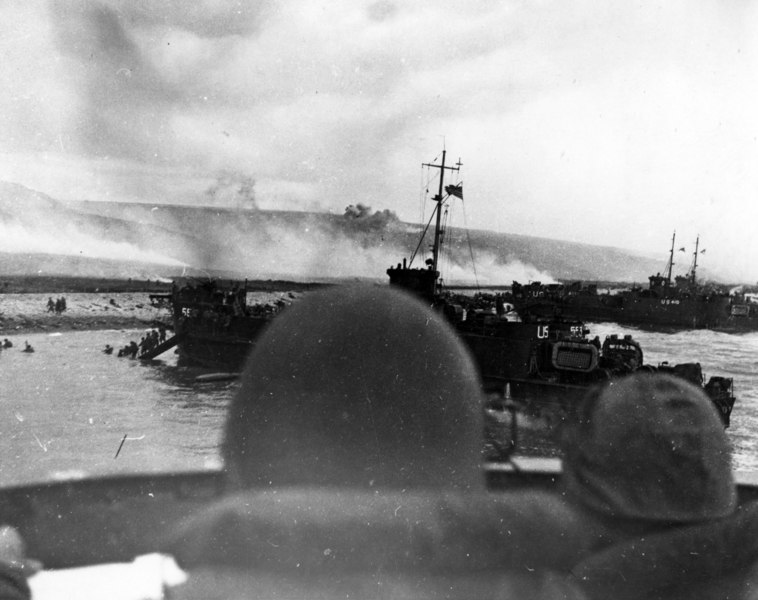 Naval History and Heritage Command, Public domain, via Wikimedia Commons
While the invasion was primarily carried out by British, American, and Canadian forces, French units also took part, including commandos from the Free French Forces. They fought alongside British elite soldiers and helped liberate their own homeland from occupation.
#6: The Allies Built Artificial Harbors
 John Alfred Hampton, Public domain, via Wikimedia Commons
To bring supplies ashore, the Allies constructed two artificial harbors called Mulberry harbors. These floating structures were towed from England to Normandy and made it possible to unload thousands of tons of supplies directly onto the beaches – a logistical miracle that was crucial to the success of the invasion.
#7: En av de største filmene om D-dagen ble laget med ekte veteraner
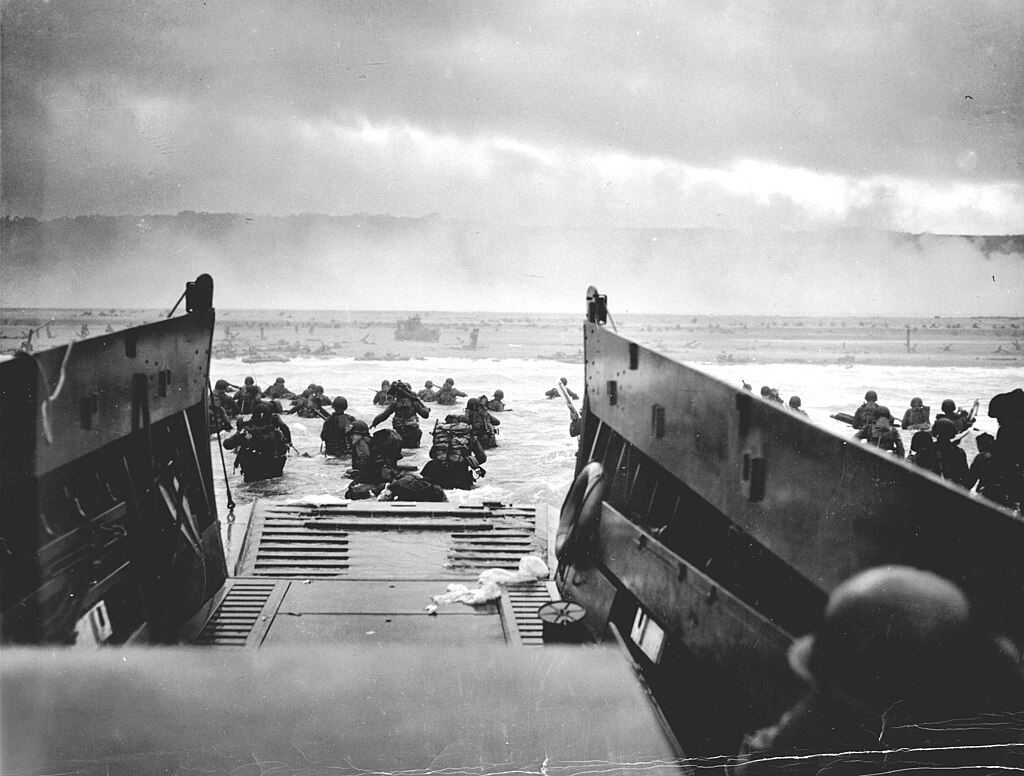 Chief Photographer’s Mate (CPHOM) Robert F. Sargent, U.S. Coast Guard, Public domain, via Wikimedia Commons
Filmen The Longest Day fra 1962 er en av de mest kjente skildringene av D-dagen. Det færre vet, er at mange av birollene ble spilt av faktiske D-dag-veteraner som gjenskapte sine egne opplevelser. Filmen ble en stor suksess og ble nominert til fem Oscar-priser.
Ikke bare en historisk dag
![SHAEF [Supreme Headquarters Allied Expeditionary Forces] Public Relations Division., Public domain, via Wikimedia Commons](https://no.motorsektionen.dk/wp-content/uploads/sites/19/2025/05/1024px-thumbnail.png) SHAEF [Supreme Headquarters Allied Expeditionary Forces] Public Relations Division., Public domain, via Wikimedia Commons
SHAEF [Supreme Headquarters Allied Expeditionary Forces] Public Relations Division., Public domain, via Wikimedia Commons
D-dagen er ikke bare en dato i historiebøkene – den er fylt med fascinerende detaljer og ukjente heltedåder. Og jo dypere man dykker ned i dens mange lag, desto større respekt får man for de menn og kvinner som endret historiens gang den skjebnesvangre morgenen i juni 1944.
Vårt team kan ha brukt AI for å bistå i skapelsen av dette innholdet, som har blitt gjennomgått av redaktørene.
![]()
Les også: